Beyond Autocomplete: Building Complex Apps Autonomously with the Ralph Wiggum Claude Code Plugin

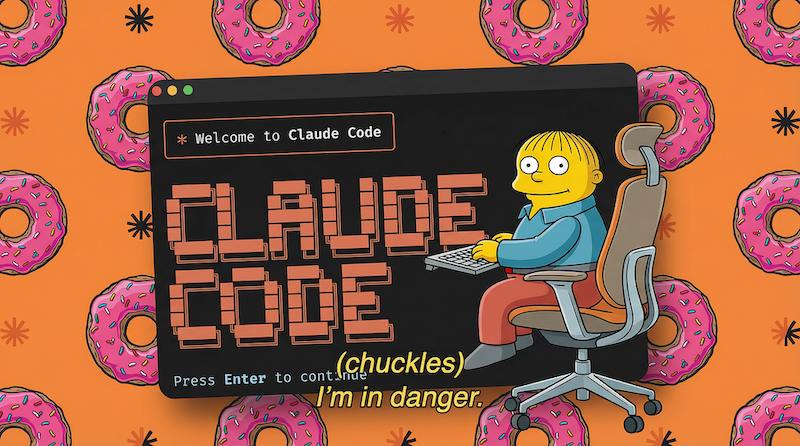
The landscape of AI-assisted engineering is shifting from simple code completion to fully autonomous agents. While Claude Code has already established itself as a premier CLI tool for developers, a new plugin—Ralph Wiggum—is pushing its capabilities into a new tier of autonomy.
In this guide, we’ll explore how the Ralph Wiggum plugin transforms Claude Code into an autonomous agent capable of working for hours to complete complex, multi-stage tasks without human intervention.
What is the Ralph Wiggum Plugin?
At its core, Ralph Wiggum is an autonomous wrapper for Claude Code. While standard Claude Code often "guesses" when a task is finished—sometimes stopping prematurely—Ralph Wiggum operates on a While Loop logic.
It continuously audits its own work against your predefined success criteria. If the requirements aren't met, the loop continues. If errors are found, it iterates. It doesn't stop until the task is complete or it hits a user-defined iteration cap.
Why use Ralph Wiggum?
- Massive Feature Implementation: Ideal for "one-shotting" entire applications or complex features.
- Self-Correction: It includes built-in linting and error-checking loops.
- Multitasking: By offloading massive tasks to a Ralph loop in one terminal, developers can focus on separate tasks in other windows.
- Autonomy: It handles the "boring" parts of coding, such as documentation and edge-case fixing, without being prompted at every step.
Getting Started: Installation
To use the plugin, you must have Claude Code installed and configured in your terminal. The Ralph Wiggum plugin is installed directly through the Claude interface.
- Open your project directory in your terminal (using a terminal like Ghosty or iTerm2).
- Launch Claude by typing
claude. - Run the installation command for Ralph Wiggum:
# Inside the Claude Code CLI:
/api add ralph-loop
(Note: Ensure you grant Claude the necessary permissions to execute the installation and file system commands during this process.)
The Anatomy of a Ralph Loop Prompt
The power of Ralph Wiggum lies in how you structure your prompt. Because it is a loop, you must provide clear Success Criteria to prevent the agent from wandering off-track or looping infinitely.
The Prompt Structure:
- Invocation: Calling the plugin (
/ralph-loop). - The Objective: A high-level description of what to build.
- Requirements: Granular details (tech stack, specific features).
- Success Criteria: The "definition of done" (linting, documentation, specific UI elements).
- Max Iterations: A safety cap to manage API costs and prevent infinite loops.
Example Prompt:
/ralph-loop Implement a Project Management Tool.

Requirements:
- Use Next.js and Tailwind CSS.
- Features: Kanban board (drag and drop), To-do list, and Project creation.
- Mobile-responsive design.

Success Criteria:
- All requirements implemented.
- No linter errors (run npm run lint).
- Documentation updated in README.md explaining the architecture.
- All components verified as functional.

Max Iterations: 30
Strategic Workflow: Multitasking with Ghosty
One of the most significant advantages of Ralph Wiggum is the ability to regain developer focus. Because the plugin runs in the terminal, it is extremely resource-efficient compared to heavy IDE-based AI tools.
The Pro Workflow:
- Window 1: Launch a Ralph Wiggum loop to build a major feature (e.g., "Build the entire authentication and database schema").
- Window 2: Use a second terminal to work on UI refinements or smaller CSS tweaks.
- Benefit: Since terminal-based agents use minimal memory, you can run multiple instances without your system lagging, effectively doubling your output.
Important Considerations: Usage and Tiers
While Ralph Wiggum is powerful, it is a high-token-usage tool.
- API Costs: If you are using the Anthropic API, each iteration consumes tokens. Always set a
Max Iterationscap (typically 20-30 for large tasks). - Subscription Tiers: For users on the $20/month tier, a single complex Ralph loop can quickly exhaust your usage limits. This tool is best suited for users on the Pro ($100/mo) or Team ($200/mo) plans, where higher rate limits allow the agent to work uninterrupted.
- Complexity Check: Do not use Ralph Wiggum for small tweaks (e.g., "Change this button to red"). Use standard Claude Code for minor tasks to save on latency and cost.
Conclusion
The Ralph Wiggum plugin is a glimpse into the future of "Vibe Coding"—a world where the developer acts as an architect and reviewer while the AI handles the heavy lifting of implementation, linting, and documentation. By turning Claude Code into a persistent autonomous agent, you move from writing code to managing a digital employee.
Source : https://github.com/frankbria/ralph-claude-code
📎 Related reading: Mastering Claude Code for Multi-Phase Development: A Practical Guide · Supercharge Your Coding with Claude AI: Advanced Workflows for Developers in 2026 · Claude Canvas: Transforming the Terminal into a High-Performance GUI for AI Agents · opencode vs Claude Code: Which AI Coding Agent Should You Use in 2026?